
Shizuku APK

Shizuku APK is an Android utility that allows compatible apps to access certain system functions that are normally off-limits. It doesn’t work like a normal appv.
Shizuku APK
Shizuku APK is an Android utility that allows compatible apps to access certain system functions that are normally off-limits. It doesn’t work like a normal app with visible entertainment or productivity features but rather works mostly as a service for other supported apps to use. The app has a simple interface where users can check the status of the service, start or stop the service, manage app permissions, and select an available activation method. When the service is running, compatible applications may reach out to it and ask for the functions they want. The useful part is that the app can work without root via ADB on supported Android versions. Rooting a device also allows users to get root access. This makes the utility flexible for different types of Android setups.
What is Shizuku App?
Shizuku App is an Android utility focused on providing a bridge between supported applications and Android system APIs. It allows applications that support Shizuku to perform certain operations with elevated privileges without each application having to create its own separate system-level solution. The app itself is relatively simple. Its main screen concentrates on the current service status and the available methods for starting it. Users can also view applications that have requested access and manage their permissions. The main benefit becomes noticeable when another compatible application needs access to Android functions that are not normally available to ordinary applications. Rather than interacting with the system directly, that application can communicate through the running service. This makes it particularly useful for advanced Android users who want greater control over supported system utilities while keeping the process organized through a dedicated service.
How Does Shizuku APK Work?
Shizuku APK App works by running a background service that compatible applications can communicate with. Depending on the device and setup, this service can operate using ADB or root privileges. After the service has been started, a supported application can request access. The user can then approve the request through the permission system. Once permission is granted, the application can communicate with the service and use the system functions it supports. ADB mode is useful because it does not require the device to be rooted. On supported Android versions, wireless debugging can be used to start the service directly from the phone. Root mode works differently because the service can operate with root privileges on a rooted device. The available capabilities can therefore differ depending on the startup method being used.
Main Interface of Shizuku App
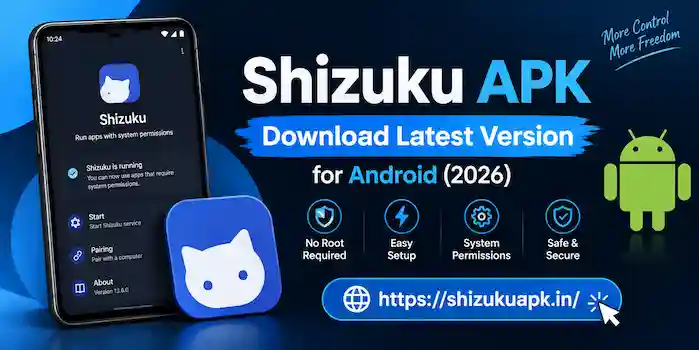
The main interface is designed for quick access to the most important parts of the service. When Shizuku APK GitHub is opened, users can immediately check whether the service is running at the moment. The interface also has options for starting the service and managing applications requesting access. This keeps the key controls in one place instead of spread over several menus. The interface does not include unnecessary sections due to the technical purpose of the utility. Most users will only need to open it when starting the service, approving an application, or checking why a supported function is not working.
Shizuku Service
The service is the central part of the experience. When Shizuku APK F-Droid is active, compatible applications can communicate with it and request supported system operations. The service can be started through different methods depending on the device. Users without root can use ADB-based methods, while rooted devices can use the root method. The service status is important because supported applications cannot communicate through it when it has stopped. This is why checking the status is often the first step when another application reports that Shizuku is unavailable.
Permission Management in Shizuku App
Permission management allows users to control which supported applications can use the service. An application does not automatically receive access simply because the utility is running. When a compatible application requests access, the user can review the request and allow or deny it. Shizuku APK for Android 15 gives users control over which applications are able to communicate with the service. The available privileges can also depend on how the service was started. The ADB and root do not provide exactly the same level of access, so some operations may only work under particular conditions.
ADB and Root Modes of Shizuku APK
ADB mode allows the service to operate without requiring root access. This is one of the reasons the utility can be useful for users who do not want to modify their Android device. On Android 11 and newer, wireless debugging can be used to start the service without connecting the phone to a computer. The user pairs the device through Android’s wireless debugging controls and then starts the service. After a device restart, the service may need to be started again when using this method. Shizuku APK download APKPure is related to Android’s restrictions on the way the service operates.
Root mode provides another way to run the service on a rooted Android device. Instead of relying on ADB privileges, the service can operate with root-level access. This can provide capabilities that are not available through ADB mode. However, the actual functions available to a supported application still depend on what that application is designed to do. Users who already have a rooted device can therefore choose the root startup method instead of using wireless debugging.
How to Use Shizuku App?
Using the utility generally involves starting the service and then permitting compatible applications to use it. For a non-rooted device, users can select the ADB-based method and follow the required wireless debugging steps when supported. After the service starts, compatible applications can request access. For a rooted device, users can select the root startup method and allow the required root permission. Once the service is running, users normally do not need to keep interacting with it. Supported applications can communicate with the service of Shizuku APK Injector when they require its functionality.
Shizuku APK Main Features
ADB Support
The utility can operate through ADB, allowing supported functions to be used without rooting the device. Shizuku PC provides an alternative for users who want advanced functionality while keeping their Android installation unrooted.
Root Support
Rooted devices can use the root startup method. This allows the service to operate with the higher privileges available through root access.
Wireless Debugging
Supported Android versions can use wireless debugging to start the service without connecting the phone to a computer. This makes the setup more convenient for compatible devices.
Permission Control
Users can manage which compatible applications are allowed to communicate with the service. Shizuku APK new version keeps access under the user’s control rather than automatically granting it to every application.
System API Access
The main purpose of the service is to allow supported applications to communicate with Android system APIs that require higher privileges than ordinary applications normally have.
Background Service
Once activated, the service can remain available in the background so compatible applications can communicate with it when necessary.
Application Compatibility
The utility can work with applications specifically designed to support its service. The usefulness of Shizuku iOS therefore extends to different Android utilities that have integrated support.
Simple Controls
The interface focuses on service status, startup methods, permissions, and related controls. This keeps the experience straightforward despite the technical purpose of the application.
Non-Root Operation
Users do not necessarily need a rooted device. ADB-based activation provides an option for compatible Android devices without root access.
Developer Support
The service provides an API that developers can integrate into compatible Android applications. Shizuku APK download allows those applications to use the service rather than independently implementing privileged operations.
How to Download Shizuku APK?
The first step before using its service is to download Shizuku APK from a trusted source. Users should download the latest version from a trusted source and make sure it is compatible with their Android device. After downloading, the application can be opened and set up according to the startup method available. Android may ask for permission if you got the application outside the usual app installation process. Once the application is installed, users can open it up and check the main screen. Then choose the startup type and enable the service. It is important to keep the application up to date, especially when using newer Android versions and a newer compatible version is available.
Shizuku APK Common Problems
Service is Not Running
A supported application may report that the service is unavailable when it has stopped. Checking the main screen and starting the service again can resolve the issue.
Service Stops After Restart
Users running the service through wireless debugging may need to start it again after restarting their phone. This is a common part of the ADB-based experience.
Permission Request Does Not Appear
If a supported application does not receive a permission request, checking whether the service is running and reopening the requesting application can help.
Wireless Debugging Problems
Pairing or wireless debugging can occasionally fail. Checking Android’s developer options and restarting wireless debugging can help establish the connection again.
Background Service Stops
Some Android devices use aggressive battery management that can stop background services. Allowing the application to operate in the background can help maintain the service.
A Function Does Not Work
Having access to the service does not guarantee that every system operation will work. The available functionality depends on Android’s restrictions, the startup method, and what the supported application is designed to request.
Pros and Cons
Pros
- Provides system-level functionality to supported applications
- Can operate without root through ADB
- Supports wireless debugging on compatible Android versions
- Offers root-based operation
- Includes permission management
- Works as a shared service for compatible applications
- Keeps the interface focused on essential controls
Cons
- Setup can be technical for new Android users
- ADB mode may need to be restarted after a device reboot
- Some functions depend on Android version and privileges
- Background restrictions can affect the service
- Not every application supports the service
- Some operations require root-level access
Frequently Asked Questions
What is Shizuku used for?
It is used as a service that allows compatible Android applications to access certain system APIs with elevated privileges.
Does Shizuku require root?
No. It can operate through ADB on supported devices. Root is another available startup method.
Can Shizuku work without a computer?
On supported Android versions, wireless debugging allows the service to be started directly from the Android device.
Does Shizuku give every app root access?
No. Applications must support the service and receive permission. The available privileges also depend on the way the service is running.
Why does Shizuku stop after restarting my phone?
When using an ADB-based startup method, the service generally needs to be started again after a reboot.
Why is a supported application not working?
The service must be running, and the application must have permission. The requested operation may also require privileges that are not available under the current startup method.
Conclusion
Shizuku APK is a specialized Android utility that works mainly in the background to provide supported applications with access to selected system APIs. Its interface focuses on service management, startup methods, and permissions rather than conventional app content. The main experience depends on the way the service is started. ADB provides a non-root option, while rooted devices can use the root method. Wireless debugging also makes ADB-based setup more convenient on supported Android versions. Once the service is active and permission has been granted, compatible applications can use it without requiring users to repeatedly interact with the main interface. This makes the utility particularly useful for Android users who want additional system functionality while maintaining control over which applications can access the service.